Industrial engines are the backbone of power generation, oil and gas production, marine transportation, mining operations, and manufacturing facilities. Whether you’re operating a natural gas compressor station, a marine vessel, or a power generation plant, every hour of engine downtime translates into lost productivity and increased operating costs.
One of the most time-consuming aspects of an engine overhaul has traditionally been removing the engine block, transporting it to a repair shop, and repositioning it multiple times during maintenance. Fortunately, modern engine block inverting systems have transformed this process by allowing technicians to safely rotate heavy engine blocks onsite.
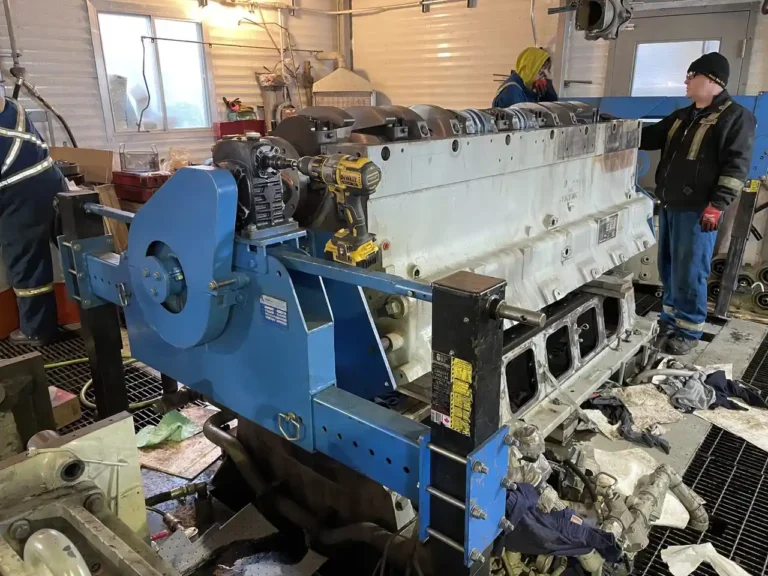
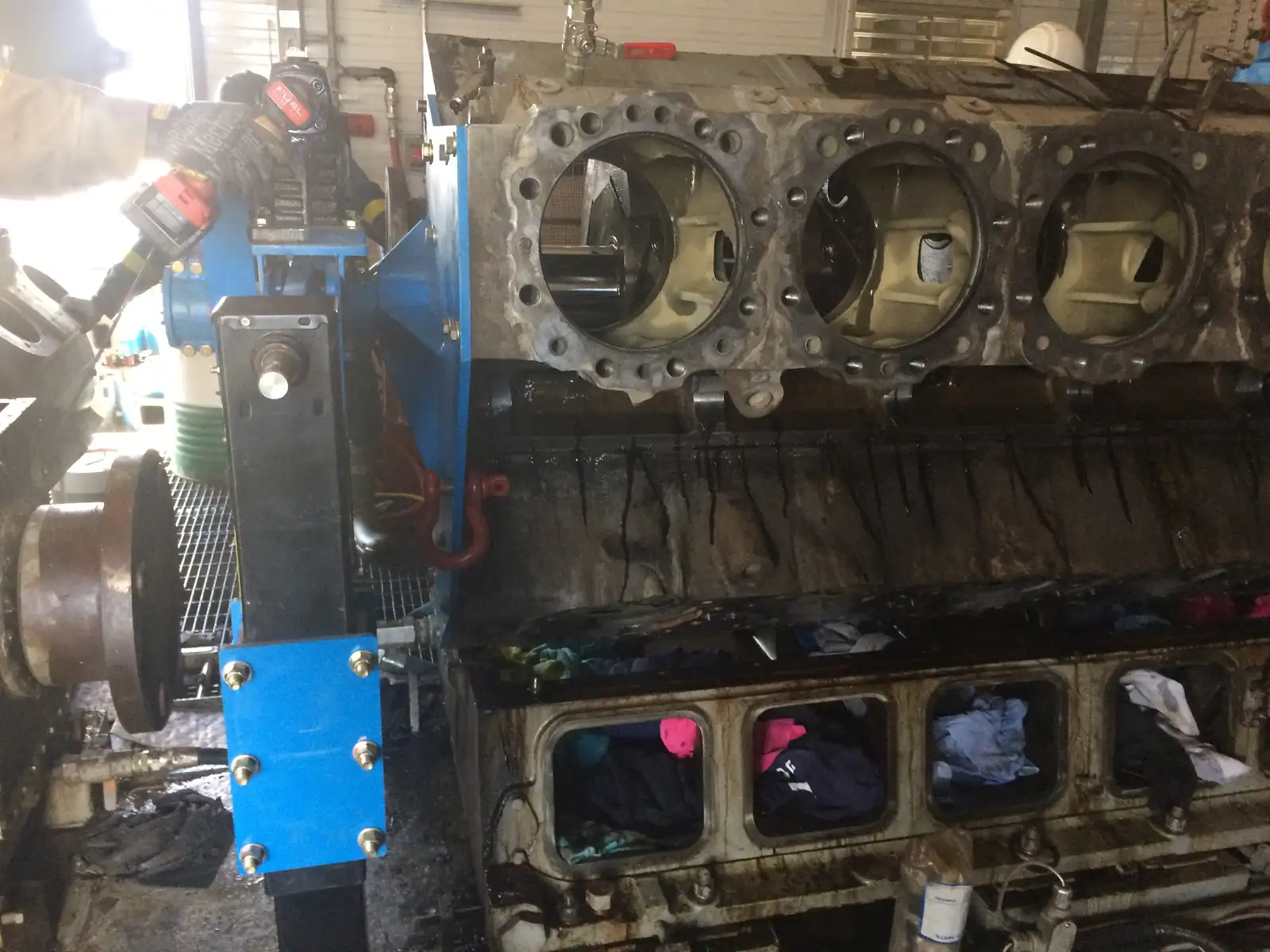
The Flipablock Big Block Inverting & Lifting Tool (BILT) was developed specifically to address these challenges. Designed for large industrial engines, it enables maintenance teams to rotate engine blocks safely, efficiently, and without unnecessary disassembly or transportation.
In this guide, we’ll explore how onsite engine block inverting reduces downtime, improves workplace safety, and delivers measurable cost savings for industrial operations.
Why Downtime Is So Expensive
Every industrial facility relies on equipment availability. When a large engine is offline, production often slows or stops entirely.
Downtime affects more than repair costs. It also impacts:
- Lost production capacity
- Delayed project schedules
- Increased labor expenses
- Rental equipment costs
- Missed delivery commitments
- Customer satisfaction
- Emergency repair expenses
For facilities operating continuously, even a single day of downtime can represent significant financial loss.
Reducing overhaul time has therefore become one of the most effective ways to improve operational efficiency.
Traditional Engine Overhaul Challenges
Historically, overhauling a large industrial engine required several labor-intensive steps:
- Disconnecting major components
- Removing the engine from its location
- Transporting the block to a machine shop
- Repositioning the block using cranes
- Supporting the engine with temporary fixtures
- Reassembling after repairs
- Returning the engine to service
Each step introduced additional delays, equipment requirements, and safety risks.
Large engines such as Waukesha VHP, Caterpillar 3500 Series, and other industrial platforms often weigh several tons, making every movement a carefully planned operation.
What Is Engine Block Inverting?
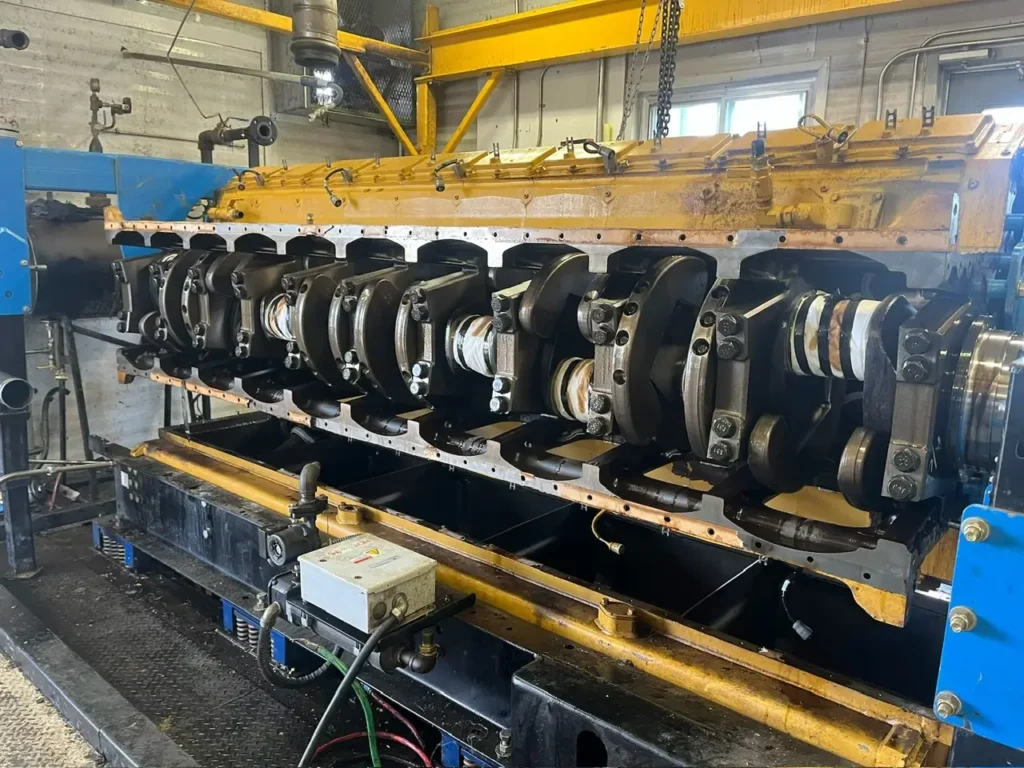
Engine block inverting is the controlled rotation of an engine block during maintenance.
Rather than relying on cranes and improvised lifting methods, technicians use a purpose-built engine block rotator to rotate the block through various positions.
This allows easy access to:
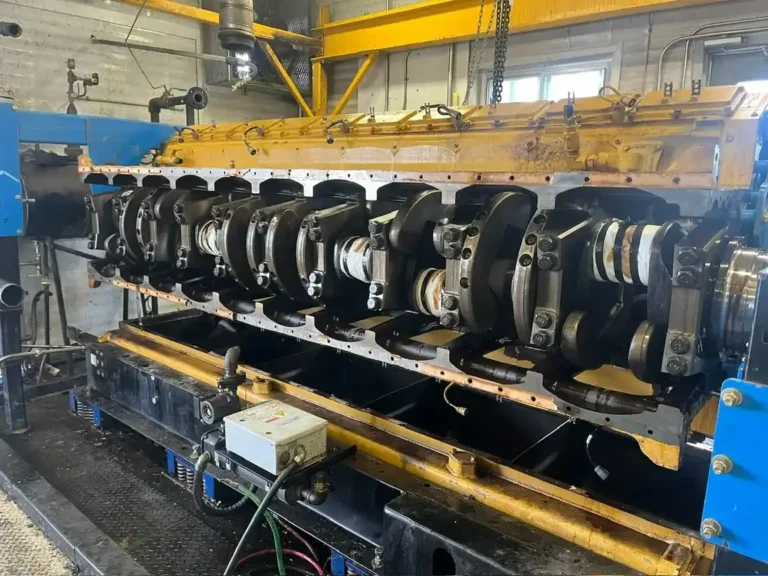
- Main bearings
- Connecting rods
- Crankshaft
- Pistons
- Cylinder liners
- Oil passages
- Bottom-end components
Instead of moving the engine multiple times, technicians simply rotate the block into the ideal working position.
Why Onsite Inverting Makes a Difference
One of the biggest advantages of modern engine block rotators is that repairs can often be completed onsite.
Instead of transporting a massive engine to another location, maintenance crews perform repairs where the equipment is already installed.
This eliminates:
- Transportation delays
- Additional lifting operations
- Shipping damage risks
- Scheduling conflicts
- Reinstallation delays
As a result, facilities can return critical equipment to operation much faster.
Faster Access to Critical Components
Engine overhauls require technicians to inspect and service components located on every side of the engine.
Without a rotator, technicians frequently reposition the engine using cranes.
Each repositioning requires:
- Rigging
- Crane operators
- Safety inspections
- Equipment setup
- Additional labor
An engine block inverting system allows controlled rotation in minutes, providing direct access without repeated lifting operations.
This dramatically reduces maintenance time.
Improved Worker Safety
Safety remains one of the most important considerations during heavy engine maintenance.
Improvised lifting methods increase the risk of:
- Dropped loads
- Unstable engine positioning
- Crane accidents
- Worker injuries
- Equipment damage
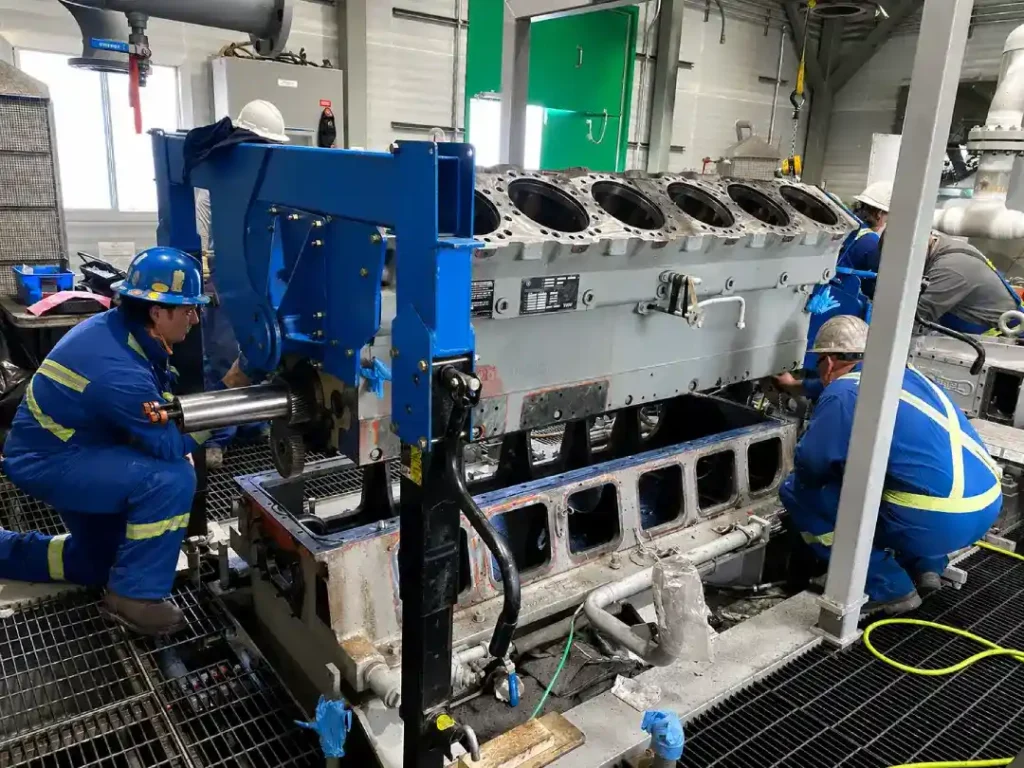
Purpose-built engine block turning equipment is engineered to safely support and rotate heavy engine blocks while maintaining balance throughout the operation.
This controlled movement reduces hazards and creates a safer work environment.
Reduced Crane Usage
Cranes are essential during major maintenance projects but they are also expensive and often in high demand.
Traditional engine repairs may require numerous crane lifts.
With an engine block rotator, cranes are generally needed only for initial installation and final removal.
Reducing crane dependency means:
- Lower rental costs
- Less waiting time
- Reduced scheduling conflicts
- Improved shop efficiency
Lower Maintenance Costs
Every hour saved during an overhaul reduces overall maintenance expenses.
Savings come from:
- Fewer labor hours
- Reduced equipment rental
- Less transportation
- Faster inspections
- Shorter project schedules
- Lower overtime costs
Over time, these efficiencies can produce substantial cost reductions, particularly for facilities performing regular engine rebuilds.
Better Crankshaft Replacement
Replacing or servicing a crankshaft is one of the most demanding maintenance procedures.
Proper access is essential for:
- Bearing inspection
- Journal measurements
- Seal replacement
- Alignment verification
- Torque procedures
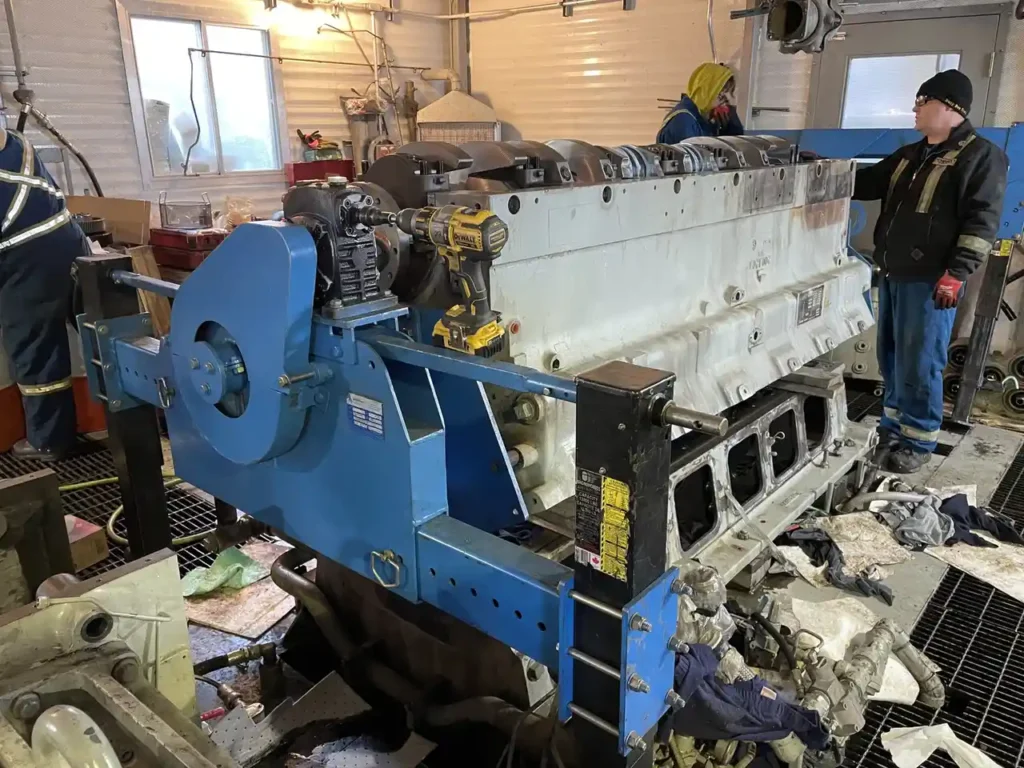
An engine block roller allows technicians to position the engine precisely, making crankshaft work safer and more efficient.
Supporting Major Industrial Engines
Large industrial engines require equipment specifically designed for their size and weight.
Applications commonly include:
Natural Gas Engines
Natural gas compression stations depend on reliable engines operating around the clock.
Quick maintenance minimizes production interruptions.
Diesel Engines
Mining, construction, and industrial diesel engines benefit from easier access during rebuilds.
Marine Engines
Marine operators often perform maintenance under tight schedules.
Reducing overhaul time helps vessels return to service faster.
Power Generation
Power plants rely on maximum equipment availability.
Efficient engine servicing improves reliability while reducing outage duration.
Waukesha and Caterpillar Applications
Many industrial facilities operate large engines from manufacturers such as Waukesha and Caterpillar.
These engines require periodic overhauls involving:
- Bearing replacement
- Crankshaft inspection
- Piston servicing
- Cylinder maintenance
- Bottom-end repairs
An engine block inverting solution simplifies these procedures by providing safe, repeatable positioning throughout the overhaul.
Improving Technician Productivity
Technicians perform their best work when components are positioned ergonomically.
Instead of working overhead or in awkward positions, engine rotation allows mechanics to:
- Work more comfortably
- Improve inspection quality
- Reduce fatigue
- Increase precision
- Complete repairs faster
Higher productivity benefits both maintenance teams and facility operators.
Extending Equipment Life
Regular overhauls help industrial engines achieve longer service lives.
Proper maintenance can:
- Prevent catastrophic failures
- Improve reliability
- Reduce fuel consumption
- Maintain performance
- Increase return on investment
Efficient access encourages thorough inspections, allowing potential issues to be identified before they become major failures.
Choosing the Right Engine Block Rotator
When selecting engine block turning equipment, consider:
- Load capacity
- Engine compatibility
- Safety features
- Ease of operation
- Durability
- Portability
- Manufacturer support
The right solution should reduce downtime while supporting a wide range of industrial engine platforms.
The Long-Term Operational Benefits
Facilities that adopt dedicated engine block inverting equipment often experience benefits beyond individual repair jobs.
These include:
- Faster maintenance cycles
- Improved technician efficiency
- Lower operating costs
- Enhanced workplace safety
- Reduced equipment downtime
- Better resource utilization
- Increased equipment availability
As maintenance demands grow, these long-term improvements contribute to stronger operational performance and a lower total cost of ownership.
Conclusion
Industrial engine maintenance has evolved beyond the limitations of traditional engine removal. While cranes, transportation, and repeated repositioning were once unavoidable parts of an overhaul, modern engine block rotators have transformed how maintenance teams approach large-engine service.
By enabling safe, controlled engine block inverting, these systems reduce downtime, improve technician safety, minimize crane dependency, and accelerate repairs. They also support more efficient maintenance for Waukesha, Caterpillar, and other heavy-duty industrial engine platforms used in natural gas, diesel, marine, and power generation applications.
For organizations seeking to reduce costs while improving operational reliability, an engine block rotator is more than a maintenance tool it is a strategic investment that helps keep critical equipment running and production on schedule.
Frequently Asked Questions
Q: What is an engine block rotator?
A: An engine block rotator is a heavy-duty device that securely holds and rotates large engine blocks during maintenance, providing safe access to all sides of the engine.
Q: Is an engine block rotator better than traditional engine removal?
A: For many overhaul and repair tasks, yes. It reduces downtime, lowers labor requirements, improves safety, and minimizes the need for repeated crane lifts.
Q: Can engine block rotators be used onsite?
A: Yes. Many rotators are designed specifically for onsite engine repair, allowing maintenance teams to complete work without transporting the engine to another facility.
Q: Which industries benefit the most?
A: Power generation, oil and gas, marine, mining, manufacturing, and heavy industrial operations all benefit from faster and safer engine maintenance using engine block rotators.
Q: Does using a rotator reduce maintenance costs?
A: In many cases, yes. Reduced labor hours, fewer crane operations, shorter downtime, and improved maintenance efficiency can significantly lower the total cost of engine overhauls.